Northeastern Satellite Lab
We’re a student club at Northeastern University that designs, builds, and launches small satellites. In April 2026 our first one, PROVES Atlas, was deployed from the International Space Station. The next, TeraLink-1, is on the bench now.
You don’t need experience to join. New members start at Intro to Satellites, Mondays at 7 PM in Forsyth 129. The rest of the week’s meetings are on the schedule.
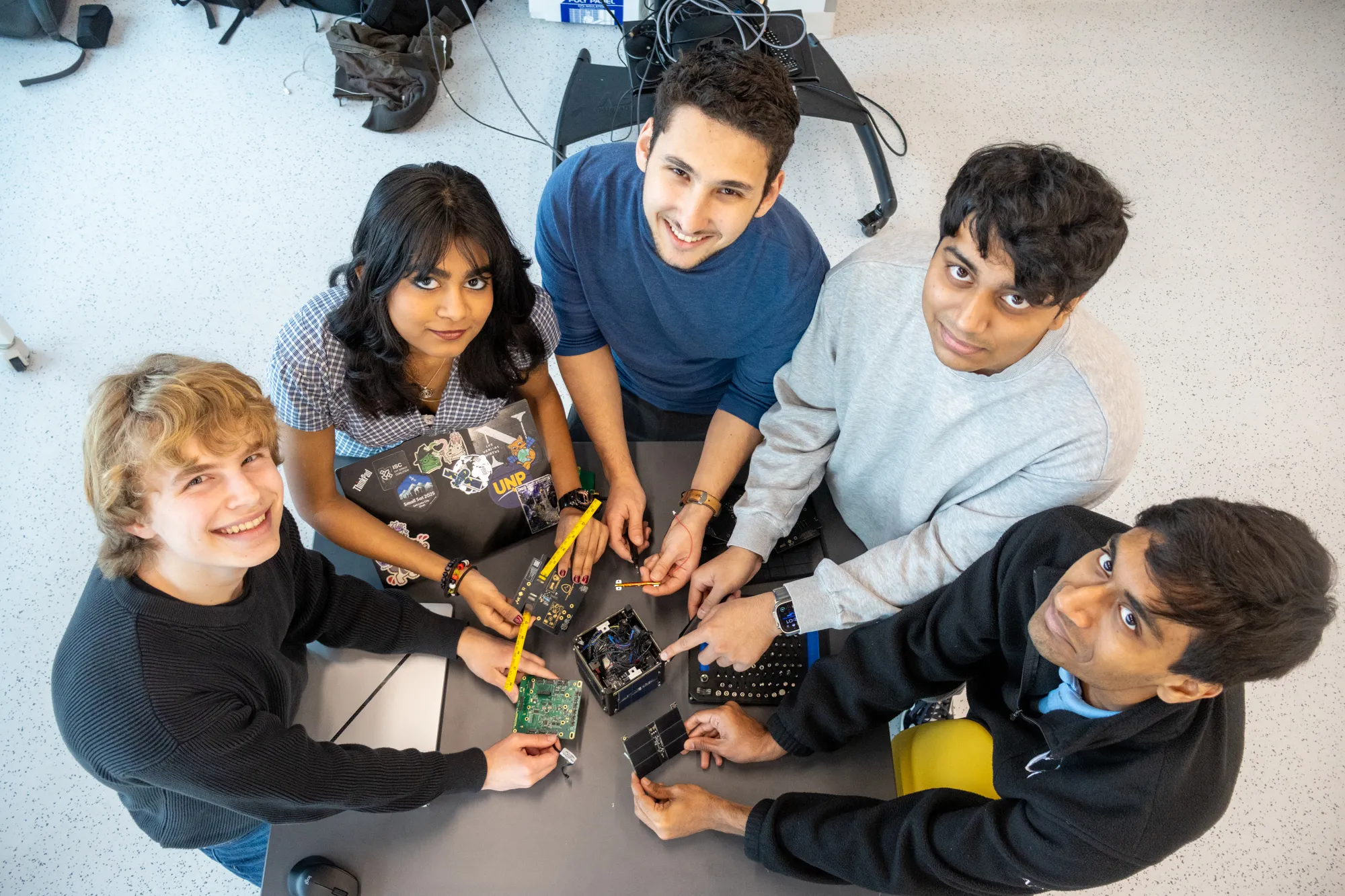
What we’re working on
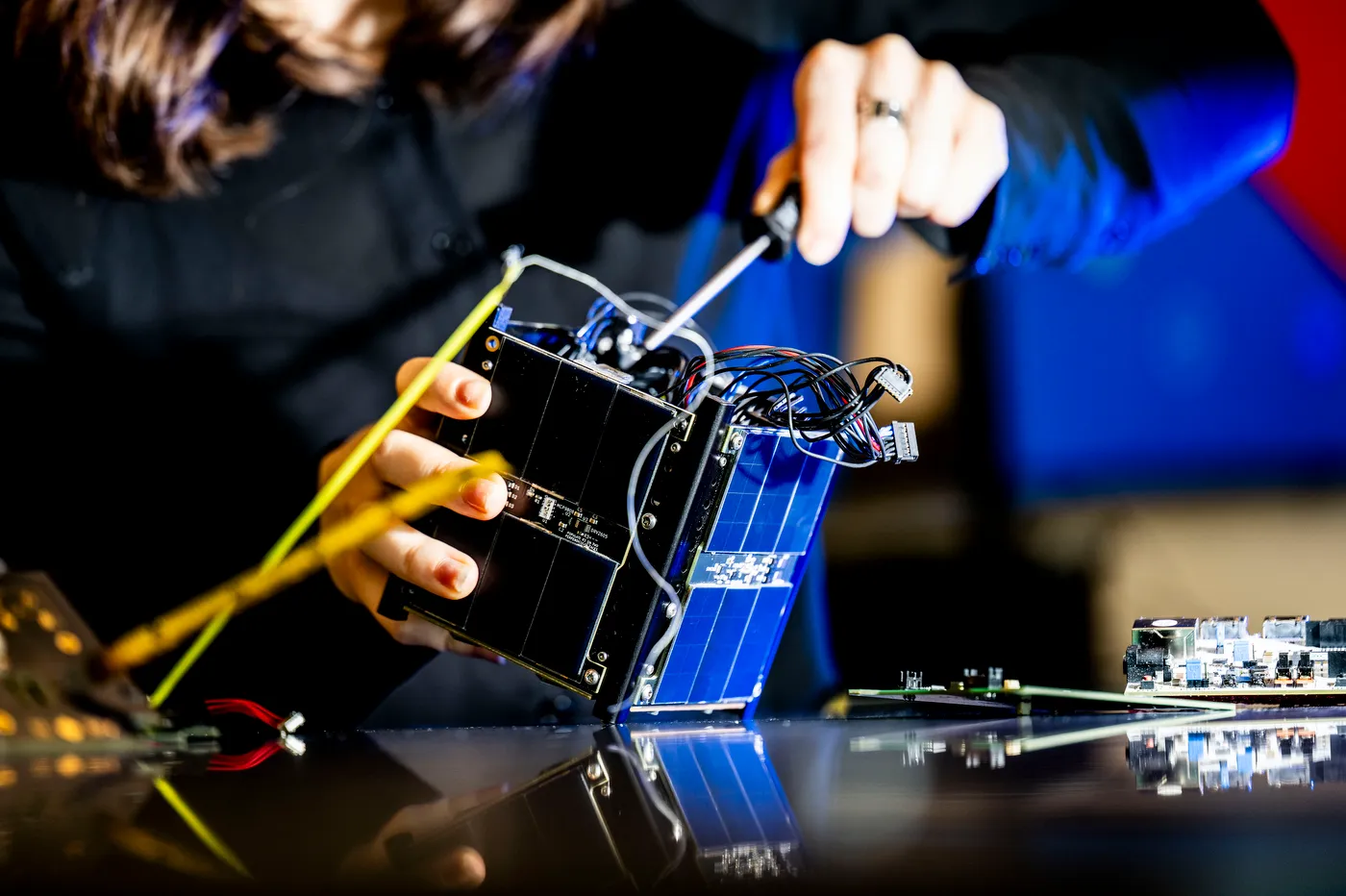
PROVES Atlas
In orbit since April 2026
Our first satellite. A camera CubeSat, built by about 15 students in under a year and deployed from the ISS with four other university satellites.
TeraLink-1
Critical Design Review in November
A 6U CubeSat that will try the first terahertz link from space to the ground. Funded by AFRL’s University Nanosatellite Program.
Sub-THz Ground Station
System Requirements Review
The other end of that link: a 2 m reflector dish that must hold its shape to within 83 µm.
DEWSat
NASA Space to Soil finalist
A drought early-warning satellite that scores farmland for drought risk in orbit and sends down only the high-risk images.
We also help the MIT Satellite Team with LEONIRD, and run open-source projects like a star tracker and a mission simulator. All projects.
How the club works
Every member joins one of four teams, each with its own weekly meeting:
- Hardware: structures, circuit boards, power, and firmware
- Software: flight and ground-station code
- Simulations: orbits, dynamics, and mission analysis
- Business: proposals, funding, outreach, and operations
Quick facts
- teams
- 4
- space missions
- 2
- research grants won
- 3+
- members per semester
- 20+
Who we work with
- NASA’s CubeSat Launch Initiative
- AFRL’s University Nanosatellite Program
- Northeastern’s Institute for Intelligent Network Systems
- UNLab
- NSF CIRC
- PROVES
- Cal Poly Pomona Bronco Space
- the MIT Satellite Team
- Morehead State University
- MIT Lincoln Laboratory
- SpaceX
- Blue Origin
- Draper
- MITRE
- RTX
- General Dynamics Electric Boat
- Space Dynamics Laboratory
- Specter Aerospace
- Shield AI
- Morse Corp
- Kostas Research Institute
- Robotics and AI Institute
- Tesla
- Akamai
- Stripe
- Wayfair
- Fidelity Investments
- Notch
- bionet
- FBI
- Harvard Medical School
- Stanford University
- Stanford HAI
- Northeastern INSI
In the news
- Students reach for the stars with launch of first satelliteNortheastern Global News, March 2026
- Northeastern Satellite Laboratory prepares for interstellar debut with cube satelliteThe Huntington News, April 2026
- New Space Engineering Club Set to Launch Their First SatelliteNortheastern College of Engineering, March 2026
- Building a space satellite isn’t cheap. These Northeastern students are researching ways to bring the cost way down.Northeastern Global News, September 2024
- Student Club Is Innovating To Lower the Cost of SatellitesNortheastern College of Engineering, September 2024
Mailing list
Meeting times, launch news, and ways to get involved, for Northeastern students and the NSL community.
Thanks. Your email app should open so you can send the request.